
Western Marsh Harrier
Circus aeruginosus
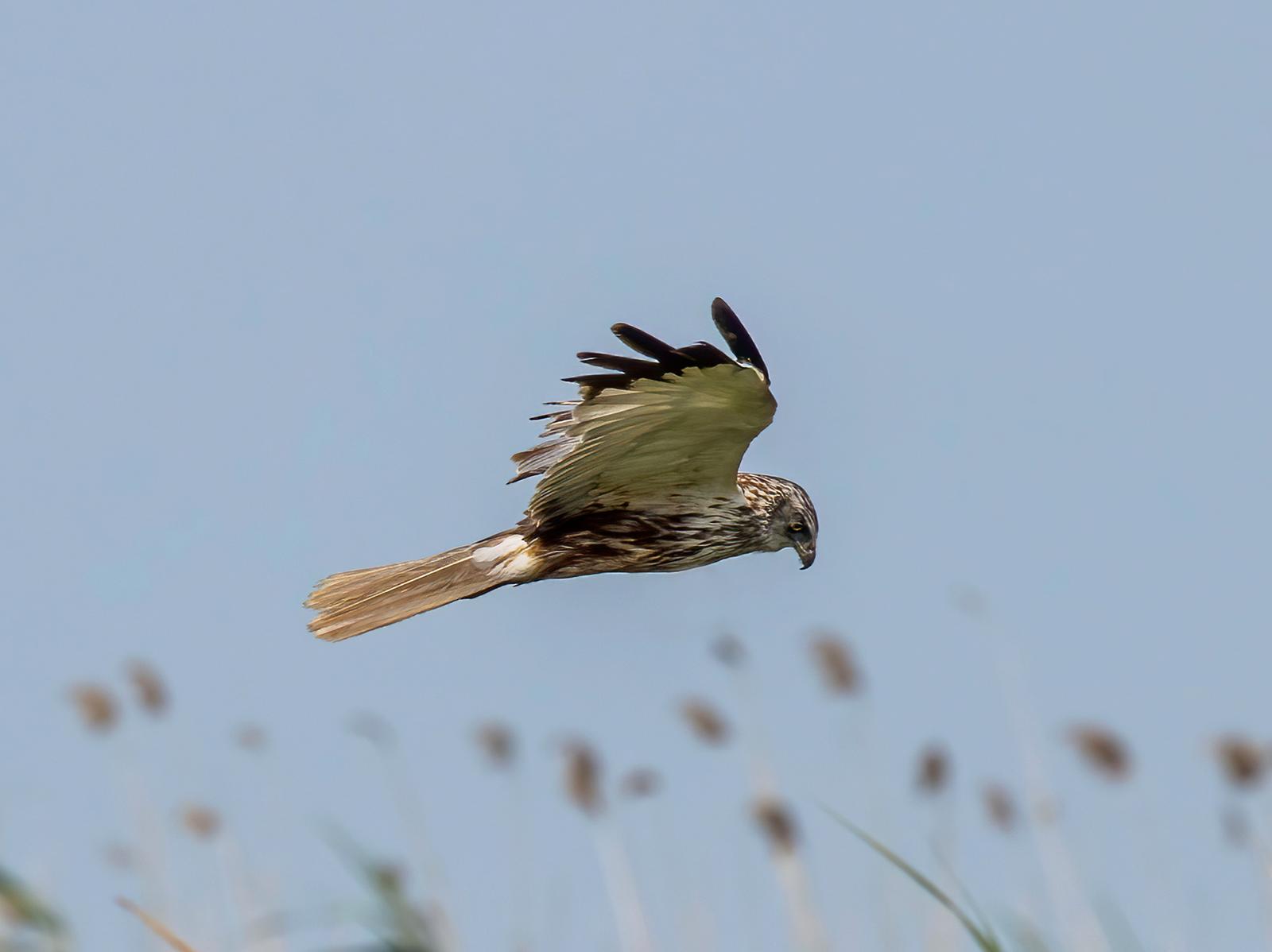
Rørhøgen er en rovfugl med et vingefang på 135 cm. Den er udbredt i det meste af Europa samt en del af Nordafrika og Asien.
A long tail and slender body distinguish its build from Buzzard. Hunting flight is low and slightly wavering, with raised wings over reeds and meadows. The female is dark with pale head patches; the male has a grey tail and secondaries within brownish , with black wingtips.
Can be confused with
- Common Buzzard — Buzzard’s broad wings and short broad tail are often seen during high circling flight. Marsh Harrier’s longer tail and slimmer body accompany low wavering hunting flight with slightly raised wings. Size alone is insufficient.
- Hen Harrier — Hen Harrier has a broad white rump in both sexes; Marsh Harrier lacks it in both males and females. Hen Harrier is smaller and slimmer, and the male is pale grey with black wingtips.
Voice
Food delivery at the nest may prompt the female’s high call. The male’s nasal call is heard during display flights among other occasions.
Facts
Wingspan
116 cm
Conservation status
ikke truet
Family
hawks, kites and eagles
Accipitridae
Read more
This is a short overview for the quiz. For the full account, go to the sources:
- Danmarks Fugle at the Danish Ornithological Society (in Danish)
- Wikipedia (in Danish)The description above is from Wikipedia (CC BY-SA 4.0).
This page brings together information from several sources. If you spot a mistake, write to hallo@magnify.dk.