
Black-headed Gull
Chroicocephalus ridibundus
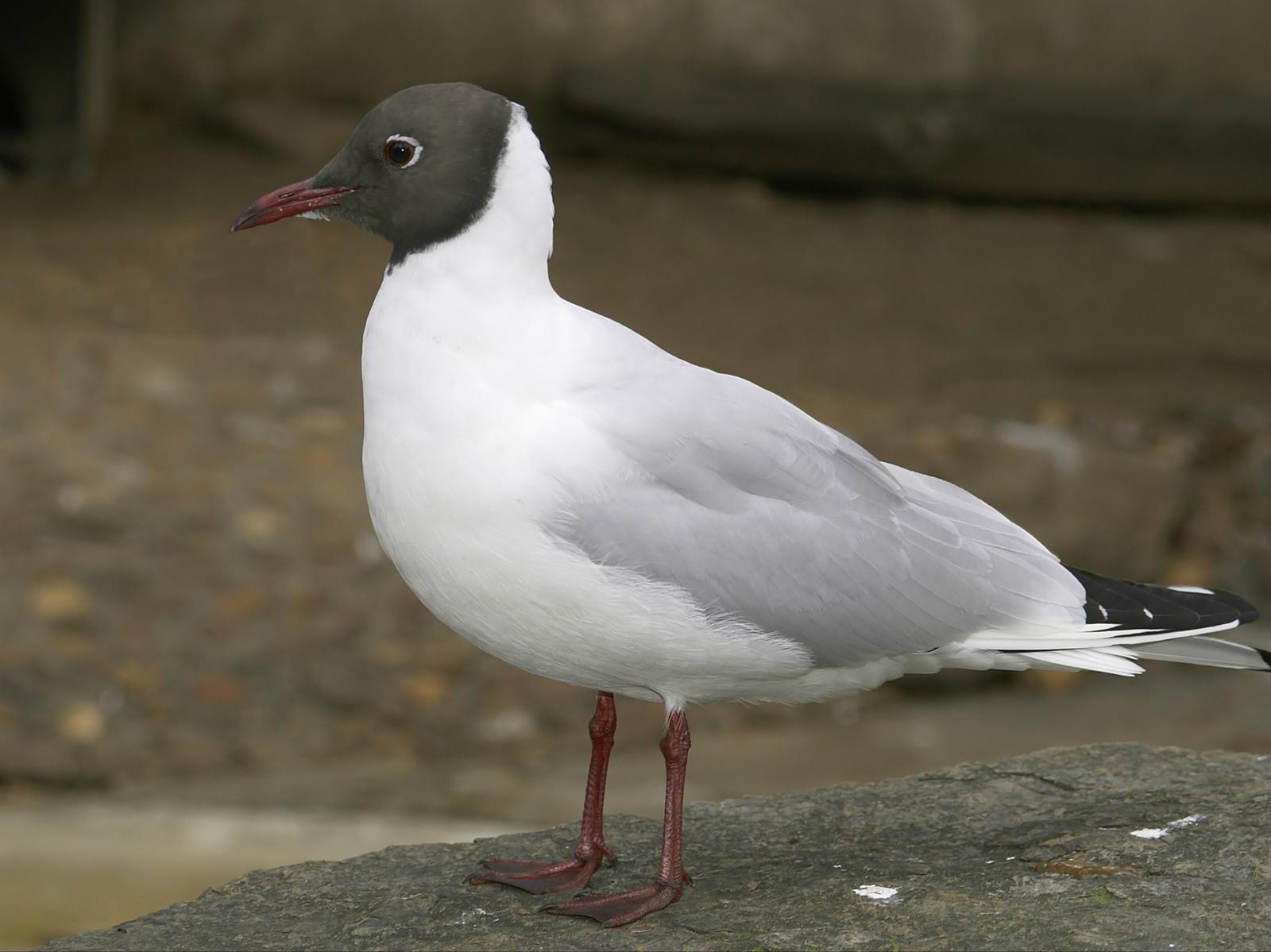
Hættemågen er Danmarks mest almindelige måge. Den er endvidere udbredt i resten af Europa, Asien og i kystegne i det østlige Canada.
Field marks
Small, light gull with a red bill and legs. A chocolate-brown in breeding dress (looks black at range); in winter a white head with a dark ear spot. The mark that works all year is the outer wing’s white front edge.
Can be confused with
- Common Gull — Common Gull is larger with a yellow-green bill and legs, lacks the hood and white leading edge, and shows black wingtips with big white "mirrors" instead.
Voice
Noisy; the typical call is a grating "kree-ar", deafening in the colonies.
Facts
Wingspan
97 cm
Conservation status
ikke truet
Family
gulls and terns
Laridae
Read more
This is a short overview for the quiz. For the full account, go to the sources:
- Danmarks Fugle at the Danish Ornithological Society (in Danish)
- Wikipedia (in Danish)The description above is from Wikipedia (CC BY-SA 4.0).
This page brings together information from several sources. If you spot a mistake, write to hallo@magnify.dk.